
Why readiness comes before the model
Most AI projects in scaling companies do not fail on the model. They fail one step earlier, on a process nobody had defined, data nobody could reach, or an owner nobody had named. The model is the cheapest part to replace. The prerequisites are the expensive part to fix after the fact.
The public data supports the point. In 2025, 5.21% of Romanian enterprises with 10 or more employees used at least one AI technology, against an EU average of 19.95% (Eurostat, isoc_eb_ai, extracted December 2025). The indicators that sit underneath AI use lag by a similar margin: 15.52% of Romanian enterprises bought cloud services and 21.87% performed data analytics in 2023, against 38.97% and 33.25% in the EU (European Commission, Romania 2025 Digital Decade Country Report). Our 2026 statistics page lists every figure with its source. The pattern is the same one we see in engagements: the gap is a prerequisites gap first.
So the checklist below does not ask which model to use. It asks whether the company has the four things a model needs in order to do useful work in production.
The checklist
Answer each question with yes, no or partly. Be strict. A "partly" is a "no" with a plan attached.
1. Process
- Can you name one process, in one sentence, that AI would change? Not "customer service", but "answering the 40 order-status emails a day that follow the same three templates".
- Is that process repeated often enough to matter? A task done twice a month is not worth automating, whatever the technology.
- Does the process work today when a person does it? AI makes a defined process faster. It makes an undefined process fail faster.
2. Data
- Does the process leave a record you can export? Emails, tickets, orders, documents, spreadsheet rows. If the inputs live in people's heads or in chat threads, AI has nothing to read yet. That is a common starting point: the first part of the project is moving them into one structured place.
- Can a system reach that data without a person copying it? A shared drive full of PDFs counts as "partly". A database or an API with access rights counts as "yes".
- Do you know what "correct" looks like? To evaluate an AI workflow you need examples of good outputs. Fifty checked examples are enough to start; zero is not.
3. People
- Is there one named owner for the process, with the authority to change it? A committee is a "no".
- Will the people who do the task today take part in the design? They know the exceptions. The exceptions are where projects break.
- Can someone in the company supervise the result after hand-off? Not a data scientist; a person who can read a weekly report, spot a wrong answer and switch the workflow off.
4. Governance
- Do you know which data may leave the company and which may not? Personal data, contracts and pricing usually may not, and that decides which tools are even eligible.
- Is there a rule for when a person must review the output before it acts? Anything that touches money, a customer or a legal document needs one on day one.
- Is there a number you will use to judge success, agreed before the build starts? Hours saved per week, error rate, cycle time. If nobody can name it, the project has no finish line.
How to read your score
| Yes answers | What it means | What to do first |
|---|---|---|
| 10 to 12 | Ready for a production use case | Scope one workflow, set the success number, build with evaluation from week one |
| 6 to 9 | Ready for a bounded pilot, not for production | Fix the missing data or ownership item before touching a model |
| 0 to 5 | Not an AI project yet | Start with process optimization or a systems project; AI comes after |
The score is a diagnosis, not a verdict. A company at 6 is usually two decisions away from 10: name the owner and give a system access to the data. Those decisions cost days, not months. What costs months is starting the build without them.
What to do when the answer is no
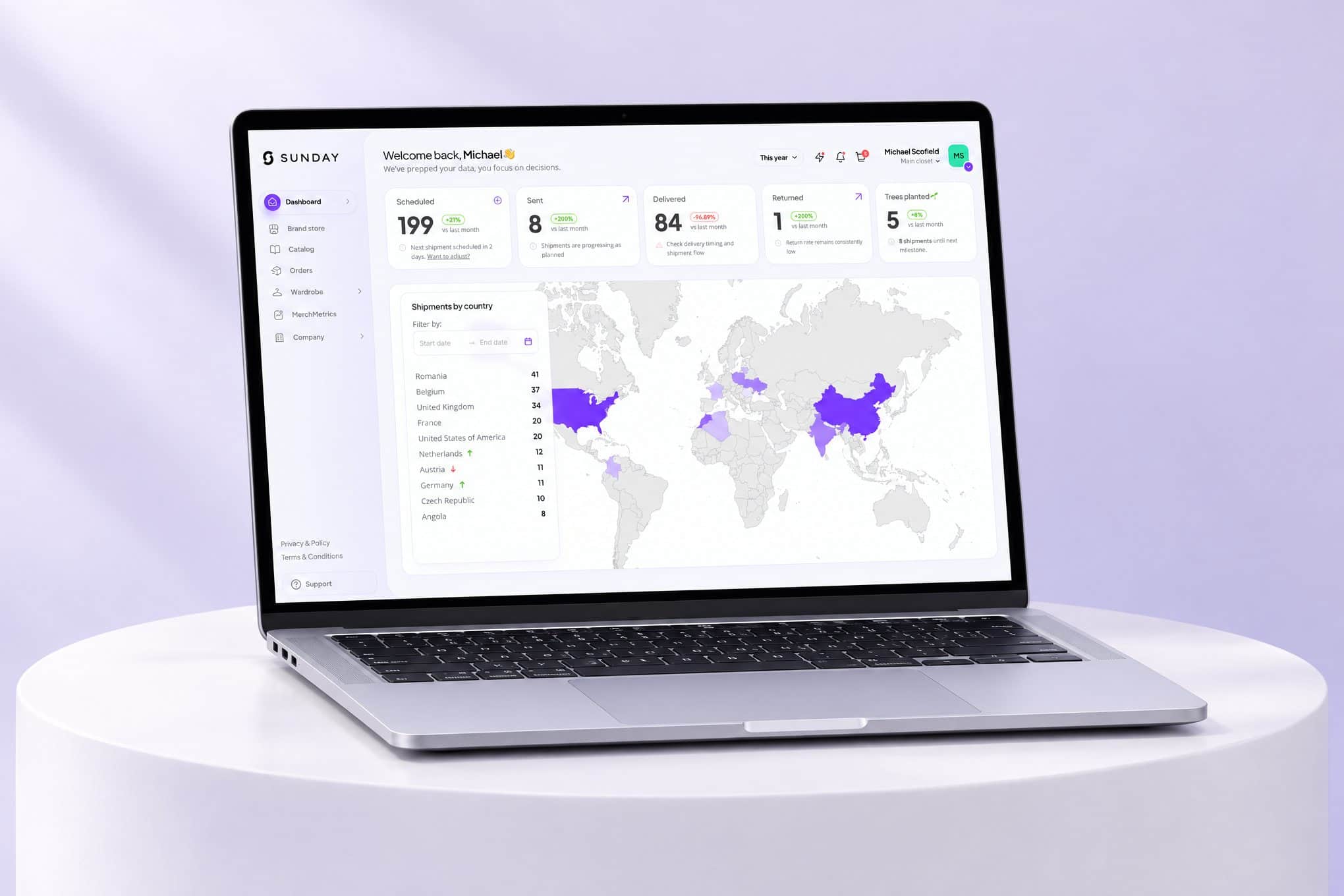
A "no" in the process column means the work belongs to process optimization first: define the steps, remove the ones that should not exist, then decide what to automate. A "no" in the data column is a systems job: connect the tools, or replace the spreadsheet that holds the truth, so that a workflow can read it. Our flow and process analysis for Sunday's B2B application is an example of the first kind: the processes were mapped before any screen was designed, so the application is designed around steps that have been defined.
A "no" in the people column is a management decision, and it is the one we refuse to work around. A workflow without an owner is abandoned within a quarter. A "no" in the governance column is usually fixed in a two-hour meeting with the person who owns data protection. With a score of 10 or more, our AI integration service takes one scoped workflow into production, with the success number agreed before the build.
What readiness does not require
- An AI strategy document. One well-scoped workflow teaches more than a strategy deck.
- A data lake or a new platform. Most first use cases run on the data already in the ERP, CRM or ticketing tool.
- In-house machine learning skills. Supervision needs judgment, not model training.
- A large budget. Readiness is mostly decisions; the first build is small by design.
Summary
- AI readiness is four questions repeated three times: is the process defined, is the data reachable, is there an owner, are the rules set.
- Score honestly; "partly" counts as "no" with a plan.
- Below 6, the right project is process or systems work, not AI.
- Above 9, pick one workflow, agree the success number and build with evaluation from the first week.